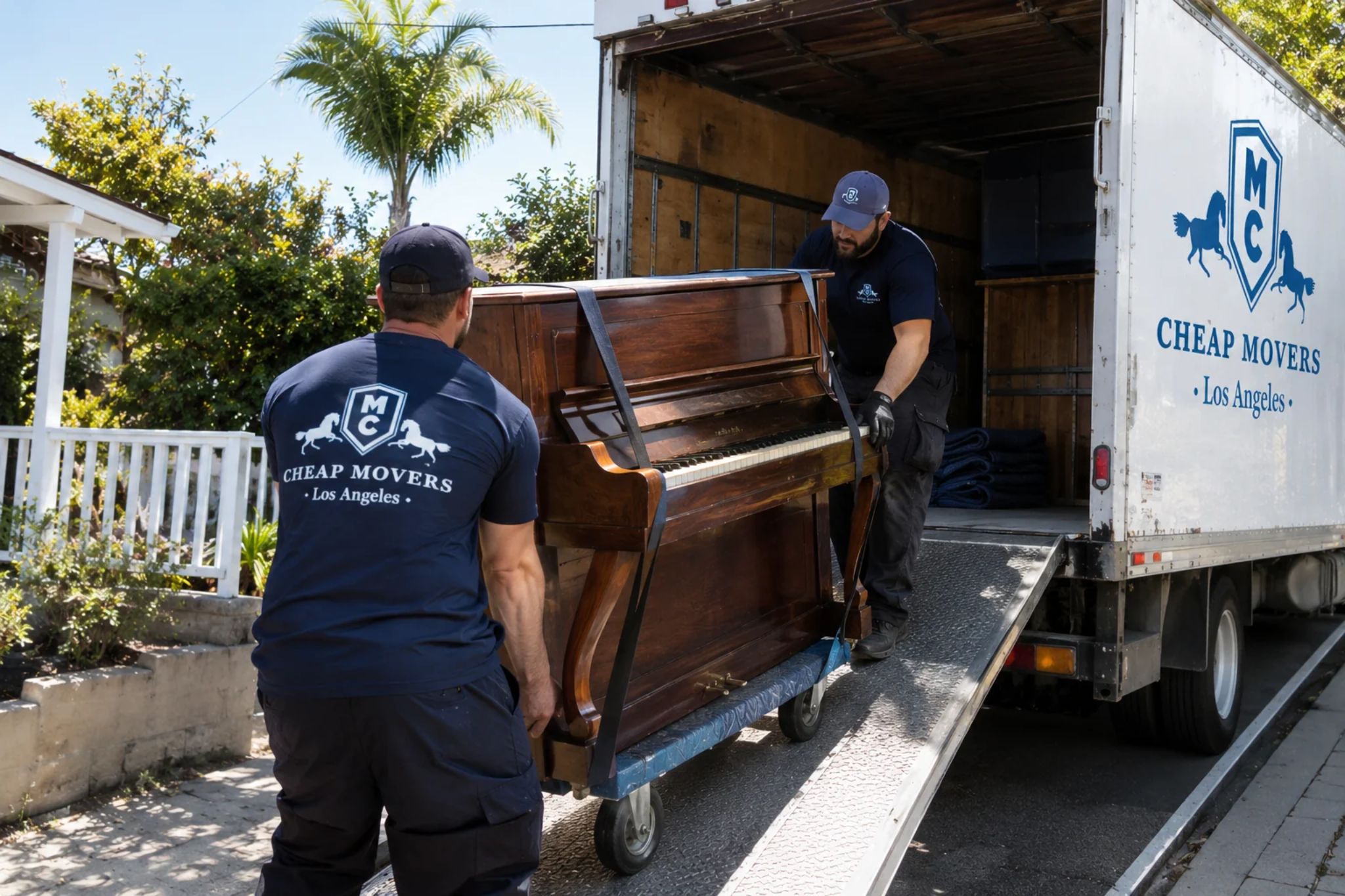
How Much Does Piano Moving Cost in Los Angeles?
How Much Does Piano Moving Cost in Los Angeles? Moving a piano in Los Angeles is not like moving ordinary furniture. Pianos are heavy, delicate, and often valuable instruments that require careful handling, proper equipment, and thoughtful transportation planning.
Whether you’re moving an upright piano across town or relocating a grand piano to another neighborhood, one of your first questions is probably:
How much does piano moving cost in Los Angeles?
The answer depends on several factors, including the type of piano, its size, moving distance, stairs, building access, and the complexity of the move.
At Cheap Movers Los Angeles, we understand that every moving situation is different. If you’re planning to relocate a piano, getting a personalized quote is an important first step.
In this guide, we’ll explore what affects piano moving costs, the differences between upright and grand piano moves, and how to prepare for a safer, more organized relocation.
What Factors Affect Piano Moving Costs in Los Angeles?
There is no single estimate that applies to every piano move. Some instruments can be moved through accessible ground-floor entrances, while others require navigating narrow hallways, staircases, or difficult loading areas.
Here are the main factors that influence the work involved.
1. The Type of Piano
The type of piano is one of the most important considerations.
Different pianos have different dimensions, weights, and handling requirements.
Upright Pianos
Upright pianos are commonly found in apartments, homes, schools, and music studios.
Although they generally take up less floor space than grand pianos, they are still heavy instruments that require proper lifting and protection.
Baby Grand Pianos
Baby grand pianos have a distinctive horizontal design and may require specialized preparation before transportation.
Depending on the instrument and access conditions, certain components may need to be removed by trained professionals.
Grand Pianos
Grand pianos are larger instruments that can require specialized equipment, additional handling, and careful planning.
The moving process may involve securing components, protecting the instrument’s finish, and using appropriate transportation methods.
Digital Pianos
Digital pianos vary significantly in size and construction.
Some are portable, while others have furniture-style cabinets that require more careful handling.
Always explain your piano type when requesting a moving estimate.
2. Piano Size and Weight
A piano’s dimensions and weight can affect the equipment and personnel needed for relocation.
Large instruments may be difficult to maneuver through doorways, hallways, or staircases.
Before contacting a moving company, gather information about your piano’s make, model, and approximate dimensions.
If you’re unsure about its specifications, photographs can help a moving specialist understand the instrument.
3. Moving Distance
Are you moving your piano within Los Angeles or transporting it to another Southern California community?
Distance affects transportation planning.
For example, relocating a piano from Hollywood to West Hollywood may involve different logistics than moving it from Downtown Los Angeles to Pasadena.
The pickup and delivery addresses help determine the route and accessibility requirements.
4. Stairs and Building Access
Stairs can make piano transportation significantly more complicated.
Moving a heavy instrument between floors requires careful planning and appropriate equipment.
Other access challenges may include:
- Narrow staircases
- Tight corners
- Small elevators
- Long hallways
- Steep driveways
- Limited loading areas
- Uneven pathways
In some situations, a piano may require specialized rigging or other arrangements.
These conditions should be evaluated by qualified professionals before moving day.
5. Special Equipment and Protection
Professional piano moving may require specialized tools and protective materials.
Depending on the instrument, these can include piano dollies, moving boards, straps, padding, and appropriate loading equipment.
The goal is to protect the instrument and surrounding property throughout the move.
Before hiring a moving company, ask whether it has the equipment and experience needed for your particular piano.
Upright Piano Moving vs. Grand Piano Moving
Not all piano moves require the same approach.
Understanding the differences between upright and grand pianos can help you prepare.
Moving an Upright Piano
Upright pianos have a vertical design, making them more compact than grand pianos.
However, their weight and internal construction still require careful handling.
A professional assessment should consider the piano’s dimensions, the route through the property, and the loading conditions.
Moving a Grand Piano
Grand pianos require additional planning because of their shape, size, and construction.
Qualified piano movers may need to secure or remove certain components before transportation.
Disassembly and reassembly should be handled by professionals familiar with the instrument.
If you own a grand piano, provide its make and model when requesting your moving quote.
Why Hire Professional Piano Movers in Los Angeles?
Moving a piano yourself can be risky.
Unlike ordinary household furniture, pianos contain sensitive mechanical components and can be difficult to balance or maneuver.
Improper handling may damage the instrument, floors, walls, or doorways and can cause serious injuries.
Professional piano moving specialists can help with:
- Evaluating the instrument and access route
- Selecting appropriate moving equipment
- Protecting the piano’s exterior
- Planning safe loading and unloading
- Coordinating transportation
- Positioning the instrument at its destination
When comparing piano movers in Los Angeles, ask specifically about piano-moving experience rather than assuming every general moving crew handles all types of pianos.
How to Prepare Your Piano for Moving Day
Proper preparation can make the moving process more organized.
Measure Your Piano
Record your piano’s approximate height, width, and depth.
Also measure doorways, hallways, and other areas along the intended moving route.
Share this information with your moving company.
Take Photos of the Instrument
Photograph your piano before moving day.
Include the keyboard, legs, pedals, finish, and any existing marks or damage.
These photographs provide a useful record of its condition.
Clear the Moving Path
Remove unnecessary furniture, rugs, and obstacles from the moving route.
Make sure hallways and entrances are accessible.
Do not attempt to lift or reposition a heavy acoustic piano without appropriate assistance.
Confirm Parking Arrangements
Los Angeles neighborhoods can have limited parking and loading space.
Check whether a moving truck can legally park near your property.
If you live in an apartment or condominium, ask management about moving hours, elevator reservations, and loading restrictions.
Discuss Special Handling Requirements
Let your moving company know about stairs, tight corners, steep driveways, or unusual entrances.
If your piano requires specialized rigging, confirm that the company is qualified and equipped to provide it.
Piano Moving in Different Los Angeles Neighborhoods
Moving challenges can vary depending on your location.
Hollywood
Hollywood has a mix of apartment buildings, residential streets, and busy commercial areas.
Parking availability and building access may affect piano moving arrangements.
Beverly Hills
Some Beverly Hills properties have large residences, gated entrances, hillside driveways, or delicate interior finishes.
Careful access planning is especially important for larger instruments.
Downtown Los Angeles
High-rise apartments and condominiums may require elevator reservations, loading dock access, and building management approval.
Confirm these requirements before scheduling a piano move.
Santa Monica
Santa Monica has a variety of residential properties and its own municipal parking regulations.
Verify the loading arrangements and applicable restrictions for your address.
Pasadena
Pasadena includes historic homes, apartments, and residential neighborhoods.
Older properties may have narrow entrances or architectural details requiring additional protection.
West Hollywood
West Hollywood’s dense residential areas can present parking and loading challenges.
Check building access requirements and legal truck parking options before moving day.
How to Find Affordable Piano Movers in Los Angeles
Finding an affordable moving solution should never mean ignoring safety or proper handling.
A piano is a specialized item, and choosing a qualified mover is important.
Look for Relevant Experience
Ask whether the moving company regularly handles your type of piano.
Experience with upright pianos does not automatically mean a company is equipped for complex grand piano relocations.
Confirm Equipment and Handling Procedures
Ask how the instrument will be protected and transported.
A qualified moving specialist should be able to explain the general handling approach and any special preparations required.
Verify Licensing and Insurance
For regulated household moves in California, verify that the moving company holds the appropriate license and insurance.
The California Bureau of Household Goods and Services provides consumer guidance and license verification resources.
Request a Written Moving Estimate
Provide the moving company with accurate details about your piano and property access.
California’s household moving consumer guidance recommends visual inspections and written estimates. Ask how these requirements apply to your particular move.
You can review the official guidance at California Bureau of Household Goods and Services.
Get a Personalized Piano Moving Quote
Every piano relocation has different requirements.
Instead of relying on general estimates, explain your instrument type, pickup and delivery locations, and any access challenges.
Need help planning a piano move?
Visit Cheap Movers Los Angeles to inquire about your moving needs and request a free quote.
What Happens After Your Piano Is Moved?
Once your piano arrives at its destination, a few additional steps can help protect the instrument.
Choose a Suitable Location
Place your piano away from direct sunlight, heating vents, and areas with significant temperature or humidity changes.
A stable indoor environment helps protect the instrument over time.
Inspect the Piano
Check the exterior for visible damage and make sure the instrument is positioned securely.
If you notice a problem, document it and contact the moving company promptly.
Consider Professional Tuning
Acoustic pianos may need time to adjust to their new environment.
Changes in humidity and temperature can affect tuning stability.
A qualified piano technician can advise you on the appropriate time for tuning after relocation.
Frequently Asked Questions About Piano Moving in Los Angeles
How much does it cost to move a piano in Los Angeles?
Piano moving costs depend on the instrument’s type, size, weight, moving distance, stairs, property access, and specialized handling requirements. Requesting a personalized quote is the best way to understand your particular move.
Is moving an upright piano easier than moving a grand piano?
Upright pianos generally have a more compact shape, but they are still heavy and require proper equipment. Grand pianos may involve additional preparation and specialized handling.
Can regular movers move a piano?
Some general moving companies have experience and equipment for certain piano moves, while others do not. Always confirm their qualifications and capabilities before booking.
Can a piano be moved upstairs?
Some pianos can be moved upstairs with appropriate planning and specialized equipment. The feasibility depends on the instrument, staircase dimensions, structural conditions, and access route.
Does a piano need tuning after moving?
An acoustic piano may need tuning after relocation, particularly if environmental conditions change. A piano technician can recommend when to schedule service.
How early should I book piano movers?
Booking in advance is generally recommended, especially for large pianos, difficult access conditions, or moves requiring specialized equipment.
How can I request a piano moving quote in Los Angeles?
Visit Cheap Movers Los Angeles and provide details about your piano, moving locations, and access requirements. Confirm that the company can accommodate your particular instrument and moving conditions.
Final Thoughts: Plan Your Piano Move With Confidence
So, how much does piano moving cost in Los Angeles?
The answer depends on the specific instrument and the requirements of your relocation.
Moving an upright piano between accessible ground-floor properties is different from transporting a grand piano through a narrow staircase or hillside entrance.
The most important steps are understanding your piano’s needs, choosing qualified professionals, and preparing your property before moving day.
A carefully planned move can help protect your instrument and make the relocation process more manageable.
Ready to Move Your Piano in Los Angeles?
Every piano move is unique.
Tell us about your piano type, pickup location, destination, preferred moving date, and any stairs or access restrictions.
Request Your FREE Moving Quote Today!
Visit cheapmoverslosangeles.com to inquire about your piano moving requirements.